

Can a story become more understandable when it is not only read, but also heard, performed and shared?
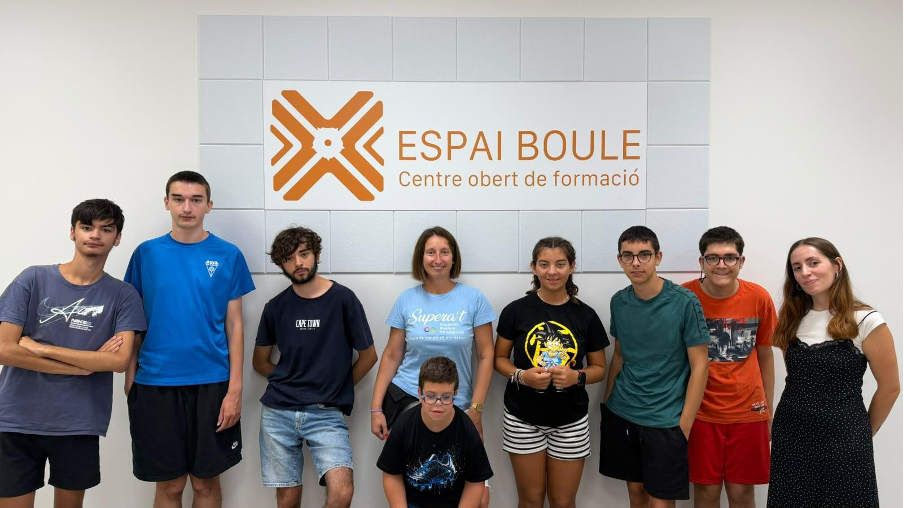
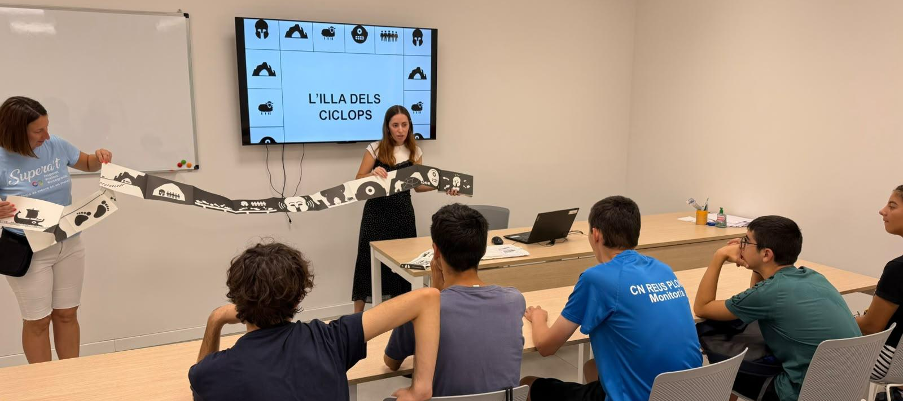
This was one of the questions behind a recent Pictomix workshop organised with participants from Associació Supera’t. The session focused on The Island of the Cyclops, a visual story inspired by the myth of Ulysses and Polyphemus, presented through a leporello format: an accordion-fold book that allows the whole narrative sequence to unfold before the reader.
The aim of the activity was simple: to explore the story together and record the voices of the different characters. Sound effects were also proposed as an optional element, for those who wanted to add them. In this way, the leporello became more than a reading object. It became a shared script, a visual support and a starting point for oral narration.
From reading to performing
The group first discovered the story through its images, pictograms and short adapted text. Together, we followed Ulysses and his companions as they arrived on the island, entered the cave, met the Cyclops and tried to escape.
Rather than asking participants to simply read the story individually, the activity invited them to take part in the narration. Each person could choose how to participate: by reading a sentence, giving voice to a character, repeating a key expression, reacting to a scene or listening to the others.
This collective approach changed the rhythm of the session. The story was not only understood through the eyes, but also through voice, gesture, pauses, repetition and emotion. Some scenes naturally invited stronger reactions: the arrival of Polyphemus, the moment of fear inside the cave, the trick with the name “Nobody”, or the escape under the sheep.
These moments showed how oral narration can support engagement. When a participant gives voice to a character, the story becomes more concrete. When another person listens and reacts, the narrative becomes shared.
Testing materials in real contexts
For Pictomix, workshops like this are essential. The project does not only aim to create beautiful or innovative materials. It aims to create resources that can be used in real educational and social contexts.
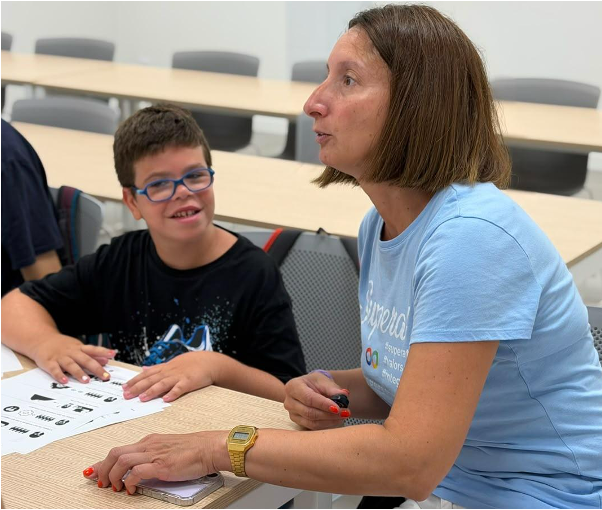
This means observing carefully what happens when a group interacts with the material. Which scenes are immediately understood? Which images need explanation? Which parts invite participation? Which elements create confusion? What role does the facilitator play?
During the session, we could see that the leporello format helped the group follow the sequence of events. Having the story open in front of everyone made it easier to return to previous scenes, anticipate what came next and understand the narrative as a whole.
At the same time, the activity also reminded us that visual resources do not work in exactly the same way for everyone. Some images were easy to recognise, while others needed support from the facilitator or from the group. This is an important lesson for Pictomix: pictograms and visual elements can be powerful tools for learning and storytelling, but they are not automatically self-explanatory. Their effectiveness depends on the context, the audience, the mediation and the activity around them.
Voice as an accessibility tool
One of the most valuable aspects of the workshop was the use of voice. Recording the characters gave participants a clear and meaningful reason to engage with the story. It also offered different levels of participation.
For some, taking part meant reading aloud. For others, it meant choosing a character, repeating a short line, adding expression, listening to the group or contributing to the atmosphere of the story. This flexibility is important in inclusive activities: participation should not have only one form.
The recording process also encouraged attention to tone, emotion and intention. Was the Cyclops angry? Was Ulysses afraid or clever? Were the companions worried? These questions opened the door to understanding not only what happens in the story, but also how the characters feel and why they act as they do.
In this sense, the workshop connected visual comprehension with oral expression. The images supported the story, the text gave it structure, and the voices brought it to life.
What we take from the session
The session with Supera’t offered valuable feedback for the next steps of the project. It helped us reflect on the clarity of the material, the role of narration and the importance of testing resources with real users before considering them finished.
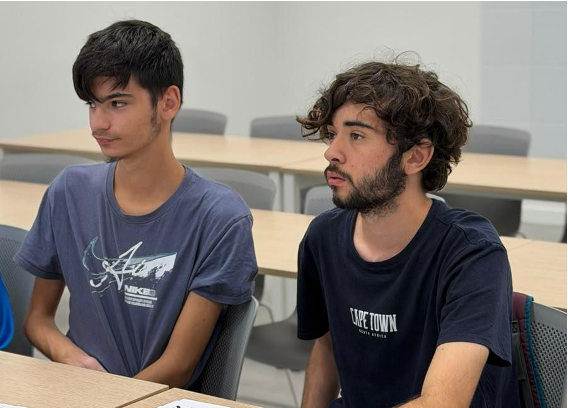
It also confirmed something central to Pictomix: inclusive reading is not only about simplifying a text. It is about creating different ways into a story. A person may access a narrative through an image, a word, a gesture, a voice, a sound, a memory or a shared conversation.
The leporello format supports this process because it keeps the story visible and open. It allows the group to move through the narrative together, without the interruption of turning pages. It also creates a common space where people can point, ask, remember, repeat and participate.
Building stories together
Pictomix is based on the idea that myths and stories can travel across cultures, languages and abilities when they are adapted with care. But adaptation is not only a design task. It is also a listening process.
By working with groups such as Supera’t, the project can better understand how its materials function beyond the page: how they are used, interpreted, questioned and transformed by the people who interact with them.
In this workshop, The Island of the Cyclops was not only read. It was voiced, shared and tested. And through that process, it helped us see more clearly what accessible storytelling can become: not a finished object delivered to learners, but a living experience built with them.